Monday, November 16, 2015

Sous Vide, Pommes Maxim, and Bordelaise

Today, we tried a new piece of equipment called a sous vide machine, which is a technique pioneered by Thomas Keller. Sous vide means "under pressure," and is a style of cooking in which food is submerged in water and pressure-cooked to a certain temperature. The food remains at that exact temperature unless it is removed or the temperature is adjusted. By this method, food can remain at medium-rare (approximately 145 degrees) for one hour or 5 hours and will never overcook.

A garnish for a dish with such a beautiful piece of meat as a 2" thick sirloin cut is a pommes maxim, a standing ring of thin, overlapping potatoes that is fried and baked.
We started making the pommes maxim by slicing regular Yukon gold potatoes on a mandoline and then punching out circles with a cookie cutter so they were all even.
 The rounds were blanched in salted water and then shocked in ice water, patted dry, and coated with corn starch. Then, we overlapped the rounds into the pinwheel shape you see below and placed in the fridge to chill.


After about 30 minutes, the pinwheels are inverted onto a pan with hot oil to fry on one side, flipped, and then placed in the oven for a few minutes to finish browning. You'll see the finished product down the blog.

Next, chef showed us how to prepare our meat for sous vide. He had already set the machine to 139.1 degrees. We peppered and salted the meat on each side.


 Next, we placed the meat into vacuum bags, bags in the vacuum sealer, and the air was sucked out.
Voila! Vacuum-beef.
 This machine would bring the meat up to 139.1 degrees and no higher. We would remove the bags after 45 minutes.
 Once removed from the pressure bath, the meat is seared on all sides in hot oil and then checked for doneness by inserting a thermometer into the SIDE of the meat. If you insert the tip into the top of the meat, you'll see a hole.
 Below, my finished plate:
Roast Sirloin of Beef with Pommes Maxim, Bordelaise Sauce, and Beet Garnish

------
Bordelaise Sauce
1 oz clarified butter or margarine
2 TB shallots
8 oz red wine
1 sprig fresh thyme
1 whole dried bay leaf
3 oz demi-glace (reduced meat stock + tomato puree)
salt and pepper to taste
1 TB butter or margarine

Sweat the shallots in a hot pan with butter until transluscent.
Deglaze (pour) red wine into the hot pan. DO THIS OFF OF THE STOVE.
Add the demi-glace, bay leaf, and thyme. 
Reduce until the sauce coats the back of the spoon.
Remove from heat and swirl in up to 1 TB of butter or margarine.
Serve over (or under) steak, veal, lamb, chicken, or vegetables.
 
Enjoy!

Friday, November 6, 2015

Beef #2 - Carbonnade of Beef, Wasabi Mashed Potatoes

Can you believe it? It's beef day #2! Today, we made carbonnade of beef (braised), wasabi mashed potatoes, bbq ribs, and the trussed beef rib from the day before.

We started preparing the ribs for the oven by sawing off about 3" sections at a time. These sections will be brushed with homemade bbq sauce and roasted in the oven. (These were so finger-lickin' good, I couldn't get a picture before they were devoured by the class.)
 My portion of beef for carbonnade:
 The steaks were pounded to tenderize, then dredged in spiced flour before being browned on the skillet.
 After the pieces were browned, they were removed from the pan and onion, beer, sugar, beef stock, and spices were added. Once the onions had sweated down to transluscent, we put the meat back in the pan to braise in the oven for 45 minutes.
 With my partner Eugnenia making wasabi mashed potatoes.
 Toasting almonds for a side dish: Green Beans Almandine (Green Beans with Toasted Almonds and Garlic)
 Chef's plated carbonnade of beef with green beans almandine, wasabi mashed potatoes, and frizzled leeks.
 Below, my plate with the same foods.
 To tie the green beans together, I blanched strips of leek and then tied three strips around the 6 green beans.
 Below, the Frenched beef rib that classmate Bonnie had worked on for two days.
 Below, Bonnie with her perfectly medium-rare piece of rib. Well done! (no pun intended)

------
Carbonnade of Beef
4 - 4oz. (Swiss) steaks
canola oil for frying
1 1/2 cups seasoned flour (+ garlic powder, onion powder, salt, and pepper)
12 oz. white onions, sliced
12 oz. dark beer
1 1/2 oz. light brown sugar
16 oz. beef or mushroom stock
2 bay leaves
2 TB chopped fresh parsley

Pound the steaks to tenderize until 1" thick.
Dredge the steaks in seasoned flour and pat off the excess.
Heat a skillet with a little oil and sizzle the steaks until they have a golden brown crust.
Remove from pan and put aside.
Add a little more oil to the pan and add the onions, brown sugar, and bay leaf.
When the onions are translucent, pour in the beer and stock and place the steaks back in the pan.
Cover tightly and place in oven for 1 hour or until steaks are tender.
Serve with wasabi mashed potatoes and chopped parsley.

------
Wasabi Mashed Potatoes
(1 head of roasted garlic) - optional
3 lbs Yukon gold potatoes, boiled until tender
8 oz. margarine or buttah
2 TB wasabi powder
1 cup heavy cream (or 1/2 cup pareve sour cream+1/2 cup nut milk)
salt and pepper to taste

Peel boiled poatoes if desired.
Melt the margarine/butter in the milk/heavy cream. Add the wasabi powder and whisk to blend. Add the potatoes by mashing with a fork or putting them through a ricer.
Season with salt and pepper.
Stir to combine, but don't overmix - potatoes can get gummy if overmixed.

Serve with steaks, if you haven't eaten the whole bowl by the time you get to this step...

Enjoy!

Break It Down - Steer Style

It's beef day! We got a delivery of two primal cuts of beef that we would break down and trim into smaller cuts.

In the kosher world, we are only able to eat the front half of steers (bulls) because the back half of the animal has the gid ha'nasheh, the sciatic nerve, which runs from the base of the spine down each leg. It says in the Torah that when Yaakov was wrestling with the angel, Yaakov was winning the fight so the angel struck him on his hip socket (the gid ha'nashe) to injure Yaakov. It is for this reason that we don't eat certain cuts of meat like sirloin steaks, flank steak, true filet mignon, short loin, tenderloin, porterhouse, or tip roast. We can, however, eat the tail of the animal (eg. kosher oxtail stew).

There are instances where the animal's sciatic nerve can be removed, thus making the back portion kosher, but this is extremely rare.


The cut below is from the rib of the animal, and we got both sides of the rib (the left and right rib cages).
 Me and the hunk o'beef
 First cut of the ribs
 Checking out the fat layer for hair
 Classmate Avi ripping off the subcutaneous layer of fat and deckel:
 Chef demonstrating how to trim the deckel.
 I trimmed the small deckel cut:
 Chef getting to the kosher steaks / filet mignon:
 A beautiful 2" cut
 Checking the temperature of a cowboy steak by putting the thermometer in the side, by the bone.
 Below, my ingredients for beef and broccoli:
 Chef trussing a rack of ribs that have been Frenched (bones scraped).
 After the standing rib roast cooked, this is what is looked like inside:
 
After I got a hold of some sliced minute steaks, I worked on a recipe for beef & broccoli with classmate Dvasha.
 I took some leftovers for my lunch at work!
------

BBQ Brisket
4 lb brisket

1 cup of dry rub (rub recipe below)
1 cup light brown sugar
1/2 cup kosher salt
2 TB powdered coriander 
1 TB garlic powder
1 TB cayenne powder
1 TB ground cumin
1 TB chili powder
3 TB paprika
2 TB turmeric
1/2 tsp dried thyme
1 TB black pepper
1 TB dried marjoram
1 tsp ground celery seeds
Mix together for an excellent rub for meat. 
3 cups bbq sauce (homemade or your favorite bottle)
3 cups water

 Rinse meat and pat dry. Once the meat is fully dry, coat in the dry rub and let sit in the fridge uncovered for 4-12 hours (overnight).
Heat a skillet with a high-temp oil, like canola or grapeseed, and brown the meat on all sides, using tongs to turn.
 In an oven-safe roasting pan, pour the water and bbq sauce, place the brisket, and scrape the pan juices from the searing skillet into the roasting pan.
Place in a 400 degree oven for up to 4 hours.
Serving suggestion: when cooled down most of the way, shred brisket with your hands and serve as bbq sliders on toasted buns with ketchup and pickles.

 Enjoy!

The Great Challah Bake - Manhattan Edition

On October 22 at the Lincoln Square Synagogue, upwards of 900 Jewish women gathered to make challah dough in the hopes that the entire island of Manhattan would smell like baking challah on Friday, and the spirit of a unifying Shabbat experience across the world.

Our ingredients were pre-measured in a bowl:
Me and my cousin, Leora!
 A shot of the room:

The demo, run by "The Kosher Baker," Paula Shoyer.
Mixing by hand!
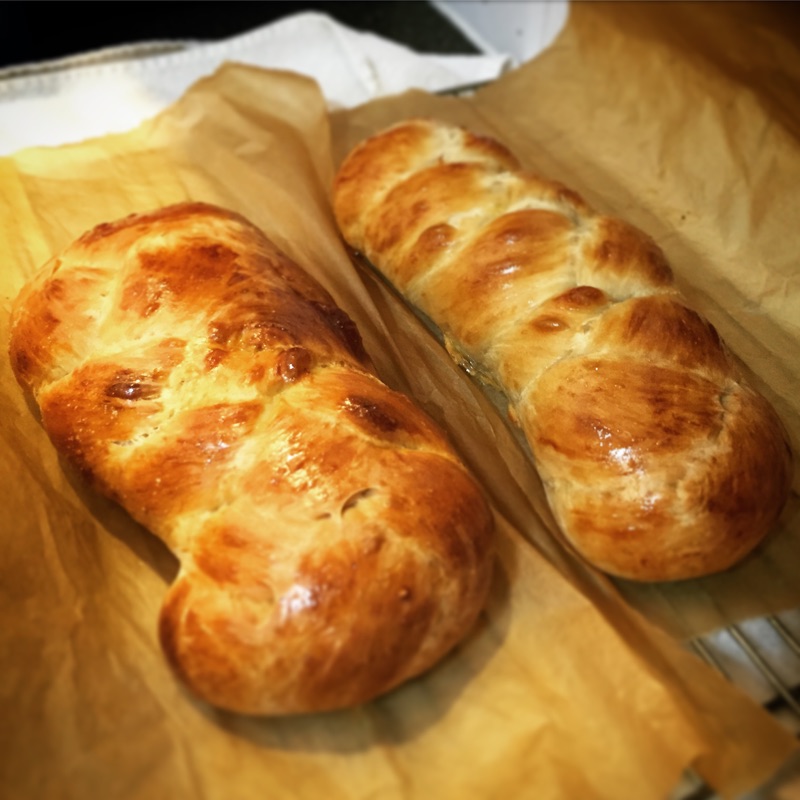
 Since we were not able to bake the challahs on-site, I brought the dough home in a cooler and baked it at home. The recipe made 2 large challahs and a medium sized-one.
They were delicious! When I make challahs, I add honey and more sugar so the loaves are sweeter, but these were delicious! I also rushed the baking a little bit, since I got home late, so they only rose 1.5 times as opposed to the full 2 times. Next time!

------
 Shabbat shalom!